At the very end of the day, Abi offered us some prompts and questions that have been swimming around my head ever since. The most poignant, for me, was: “In this work about toddlerhood, what are we still missing, avoiding, afraid of, or only just looking at out of the corner of our eye?” As someone invested in research and knowledge about disability, it may come as no surprise that I often find myself willing disability in to the room more explicitly than the corner of our collective eye. This is not new, and it is one of the reasons my work and I are part of the toddler team – in the disability studies children and their childhoods are notably absent and the notion of toddler, bordering on non-existent. We know that early childhood, like the vast majority of study in the arts and social sciences, has long avoided or ignored disability as integral, relegating it instead to its own niche or specialist silo. This “critical avoidance” of disability, as argued by Bolt, only reinforces its marginalisation, and the Towards Toddlerhood project aims to resist doing that avoiding any longer.
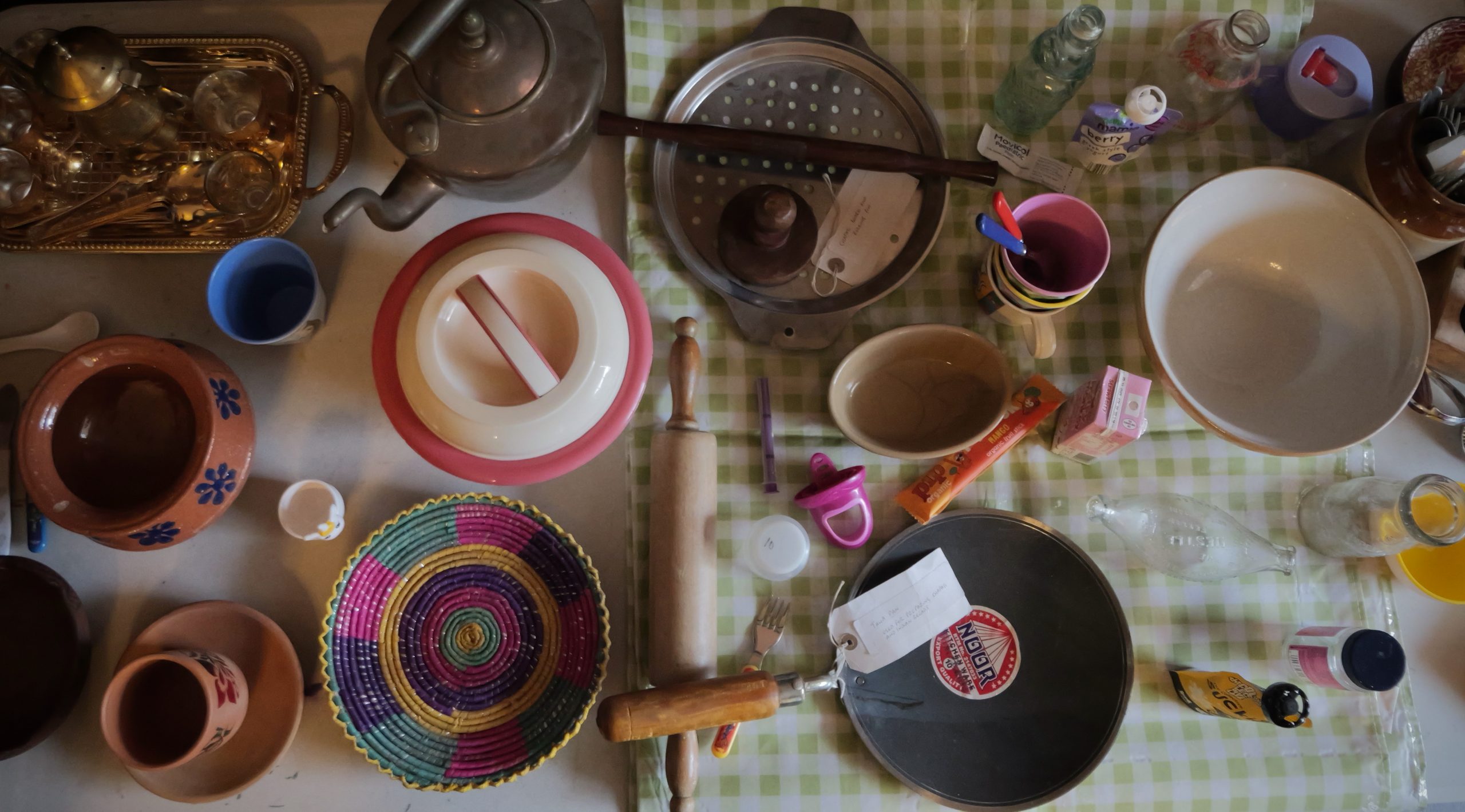
That said, it should not surprise us, as a team or as a newly forming network, that our work in these early months, in two gatherings, has very much skirted around disability, acknowledging it only in passing, only from the corner of the eye. With our careful and close attention to the multiple injustices developmentalist logic imposes on toddlers and families, through its racist, sexist, and colonial legacies, it is no wonder that its ableist legacies have not yet been confronted in central or explicit ways. In our Movement day, disability was ever-present but often unnamed: in the bodies that did not move with the ease or intention the scores invited, or in the unspoken anxieties and hesitations that held back the close, intimate task of networking with strangers. In our Feeding day too, disability was largely absent, both materially and discursively. What might our collection of objects have looked like, and what might it have done to our conversations and arts activations, had it included feeding tubes and stoma bags, had the food-related children’s books we picked up included tracheotomies and anaphylaxis? Had the food we touched and ate been laced with foul tasting medication or the sensation of their texture intolerable to our mouths, noses, and hands? In a quiet nod to the presence of disability in toddlerhood feeding, constipation powder and liquid medication syringes sat between plastic sippy cups and 1900s ornate glass feeling paraphernalia from the Clifton Park Museum collection.
If we are to take embodiment and materiality seriously, of course, disability does not appear or disappear through naming. It is ever-present in relational becoming: in our bodyminds within the workshop rooms, in the objects of our collections, steeped in the mundanity of how they must be navigated when one’s bodymind exists in non-normative ways be it toddler or to care-give with a toddler. The sippy cup that continues to be used well beyond toddler years contests developmentalist narratives that would confine assisted eating and feeding to those firmly within the age boundaries of toddlerhood and no further. Disabled children are often referred to by their ‘developmental age’, children born prematurely have their ‘corrected age’ attached to their health and education records like shorthands for reality, messing with time and its associated feeding practices. Disability is at the very heart of the Red Book’s plotted growth charts and the Health Visitors Ages and Stages Questionnaire. Disability is forever the absent presence in toddlerhood. To be ‘school ready’ a child is expected to drink from a cup and eat unassisted. Such school readiness always and already neglects or avoids disability. And of course, disabled people contend with infantilisation through the requirements, or the desires, for interdependence that disability can bring to food, feeding, nourishment, and eating. One need only look at the eco-disablism embedded in rhetoric surrounding the “common sense” banning of single-use straws or pre-packaged, prepared food which to follow such logic leaves some disabled people without independent access to water and food. Such interdependent feeding and food practices, which are potentially life-giving and life-sustaining well beyond the imagined bounds of weaning or toddlerhood, complicate the supposedly apolitical, natural, or autonomous assumptions about feeding and eating that developmentalist, normatively imagined logics of the individual bounded subject would have us accept.
As we move forward into our next workshop on tantrumming, I will turn my gaze actively towards disability. Not through a cautious side-eye or fleeting glance, but by centering not only the embodiment of disability, but also its social, political, and cultural meanings when they come into contact with an artful toddlerhood.