How, when and what to feed children is contested from birth. We explored feeding as an on-going site of regulation, struggle and loss, by engaging with the materiality of food and permeability of the body.
On Wednesday September 3rd we hosted our second project day, Feeding. Hosted by Clifton Park Museum and fed by Momma Arab’s Kitchen, a mix of some faces who had been at Workshop 1 at the Horse and Bamboo, and some faces who were coming into the Toddlerhood project space for the first time. Abi set up the flavour for the day, by introducing ‘How, when and what to feed children is contested from birth. We will explore feeding as an on-going site of regulation, struggle and loss, by engaging with the materiality of food and permeability of the body.’
Our attention is grabbed by the biscuit from our morning refreshments very cleverly evening out the instability of the projector inviting us to yet another way to think and know with food.
The mist and drizzle that feeds us lifts to start the day. The greenery outside the window brightens after its drink.
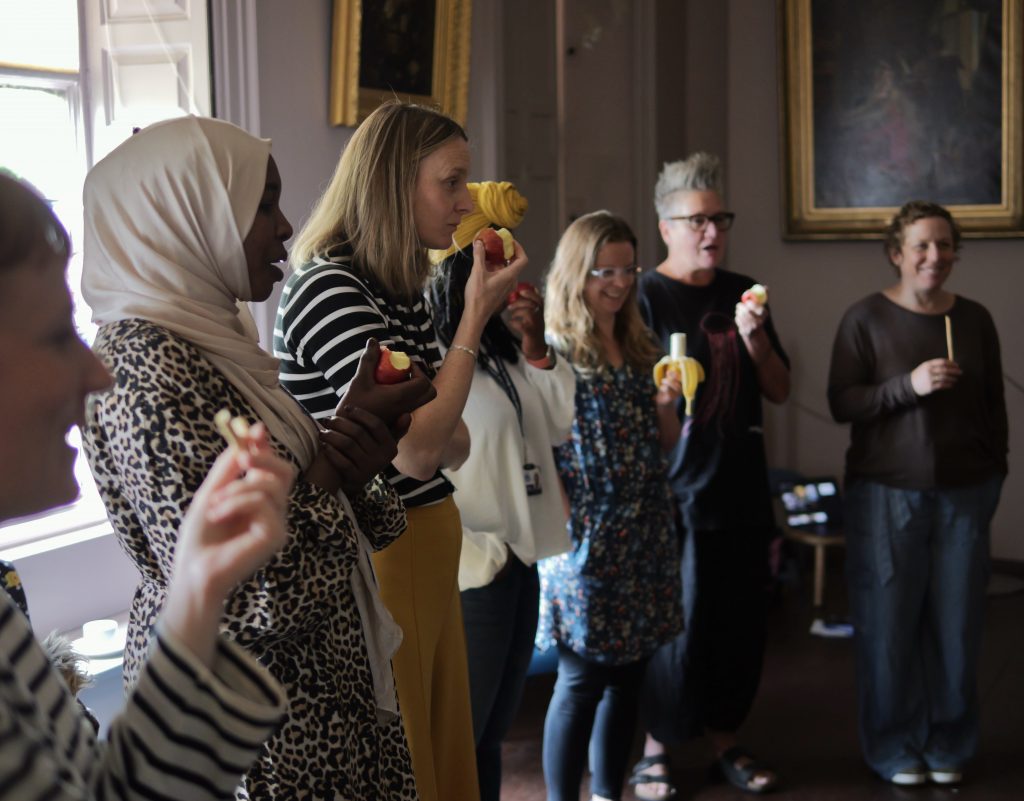
We were invited by Anna to do things to be able to know things differently’. Through a series of scores we tuned in to our bodies, being asked to notice pace, and movement, to play our hands on our own tummies and to find our place and rhythm as a group in the museum room. After settling in to this, food entered the score including shared eating and the uncanny experience of watching, and being watched while eating breadsticks, apples, and bananas.
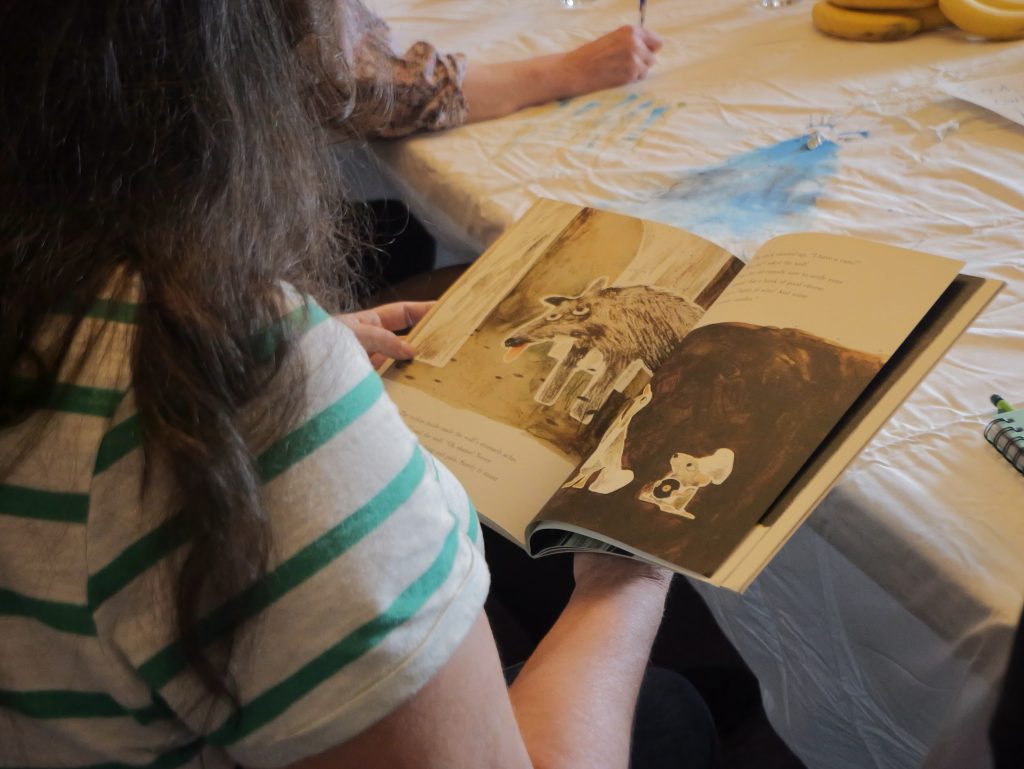
Vik then shared a short history of children’s literature and food. She blogged about what she shared here.
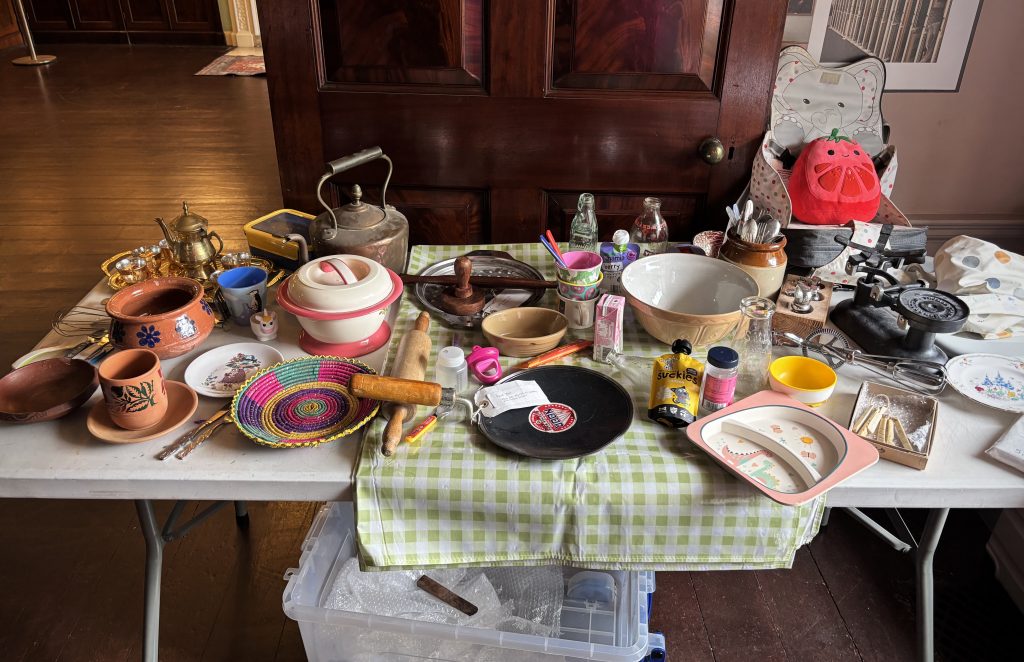
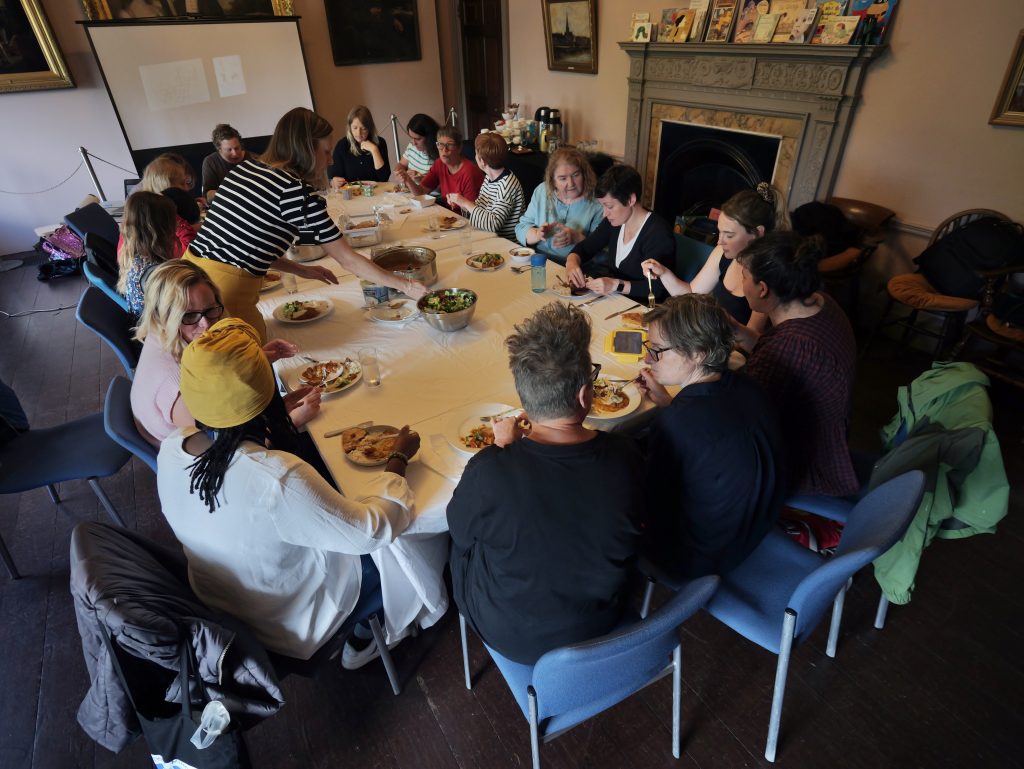
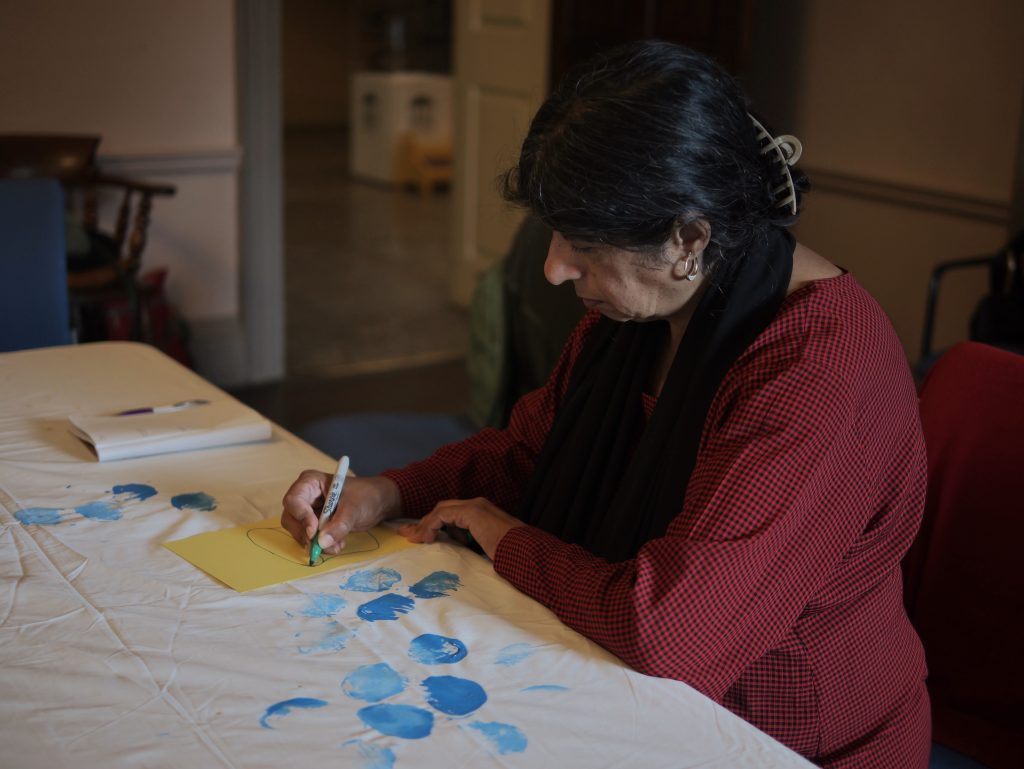
Lunch was family-style, with the furniture of the room rearrange to seat us all around a big table and participants bringing their own plates and cutlery from home. Conversations and nostalgia about the memories and meanings of our homewares happened in between the passing of sharing bowls and serving platters. Some participants deliberately, and/or absent-mindedly, doodled and decorated the paper tablecloths in quiet contemplation or loud, vocal disruption of what it meant to sit at a dinner table and eat ‘properly’. Nothing was off the table, so to speak.
We had planned to go out for a walk in the beautiful grounds of Clifton Park to digest our lunch but Mother Nature had other plans as we were treated to the most spectacular torrential downpour. From inside the building, its force was cinematic, falling as if artificial stage-directed sheets and bouncing off the tarmac.
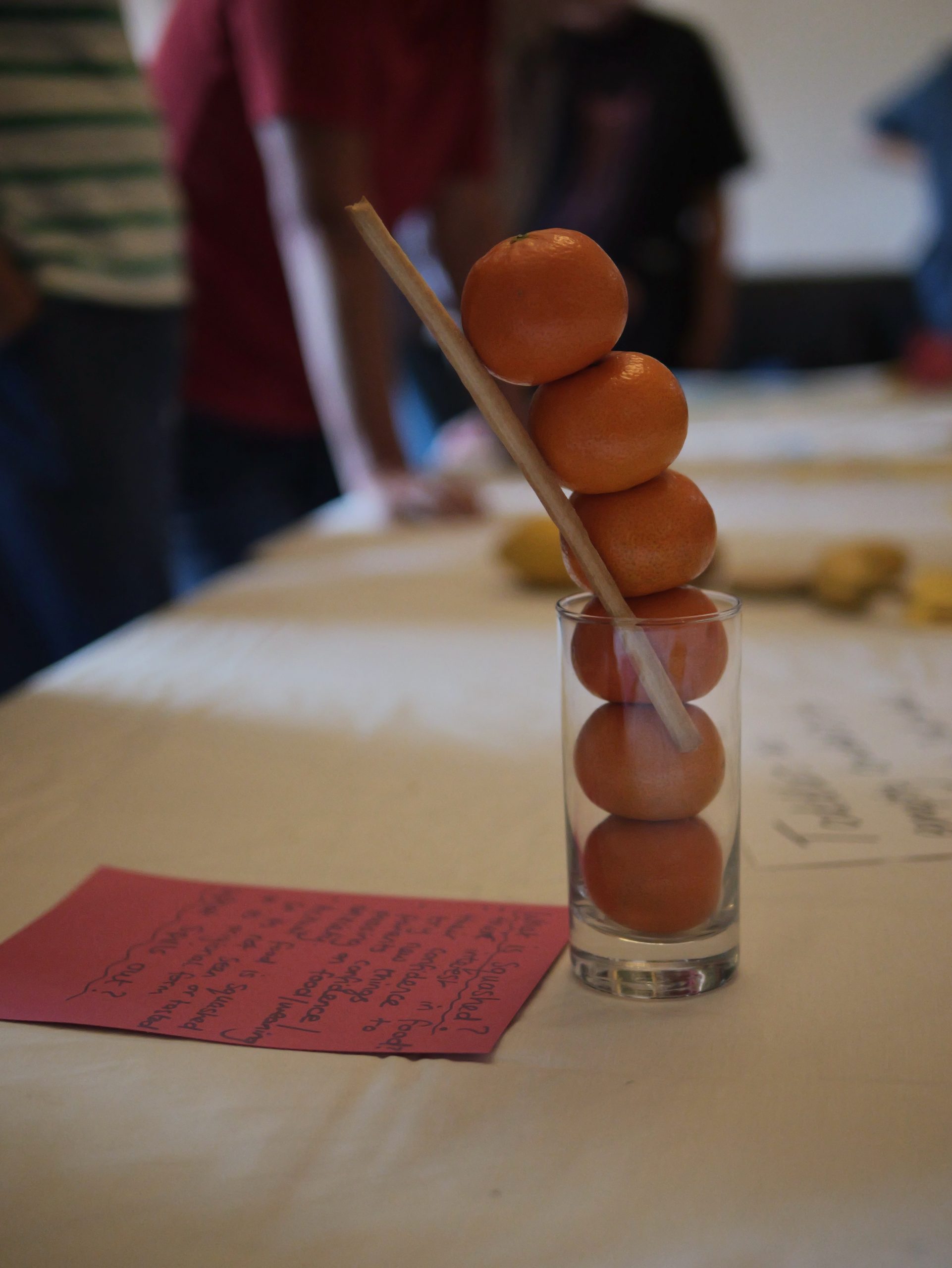
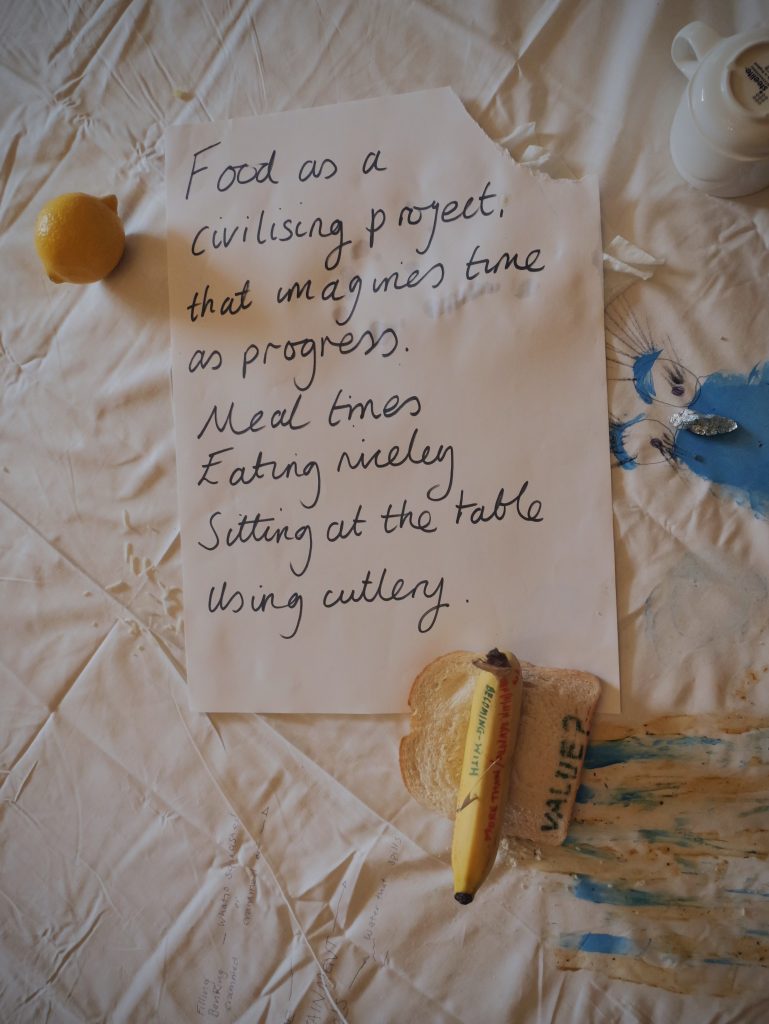
Instead, we took time on our own to explore the entire museum building and its exhibitions and collections whilst digesting, with Abi and Ruth inviting us to contemplate in our digestion, ‘the spirit of the thing playing on your mind’ from the day thus far. On our return to the room we were invited to share what thoughts had come up for us all – either making notes or drawings on coloured card, or by putting objects, craft materials, food, and ourselves to use, to sculpt, curate, and create. As you can see from the photographs, there was deadly serious humour and play in what was produced and the conversations that came from the activity, which we sat and reflected on around the table.
Food is never just food. It is never neutral. Nor is eating. Nor being fed.
Feeding as squashed and appalling
Feeding as additive/s
Feeding as shame and virtue, not enough and too much
Feeding as disorientating and confusing
Feeding as breath and water and spirit
Feeding as collective
Feeding as time, created in eating
Feeding as shorthand
Feeding as performance
Feeding after digestion, composting, returning to the earth
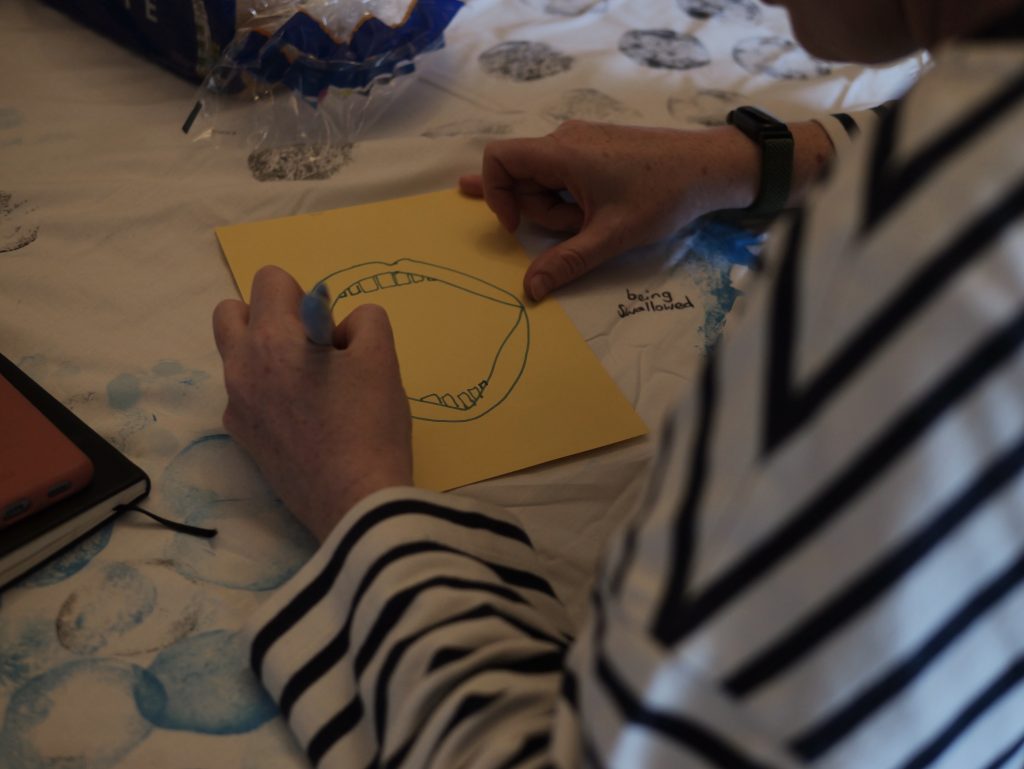
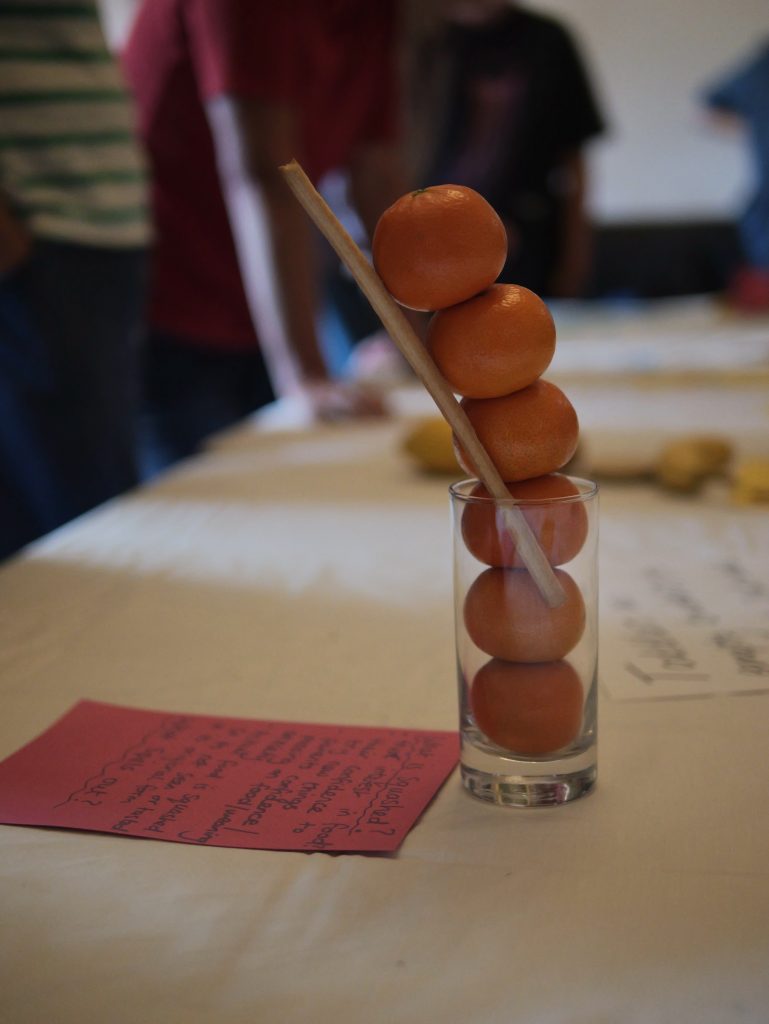
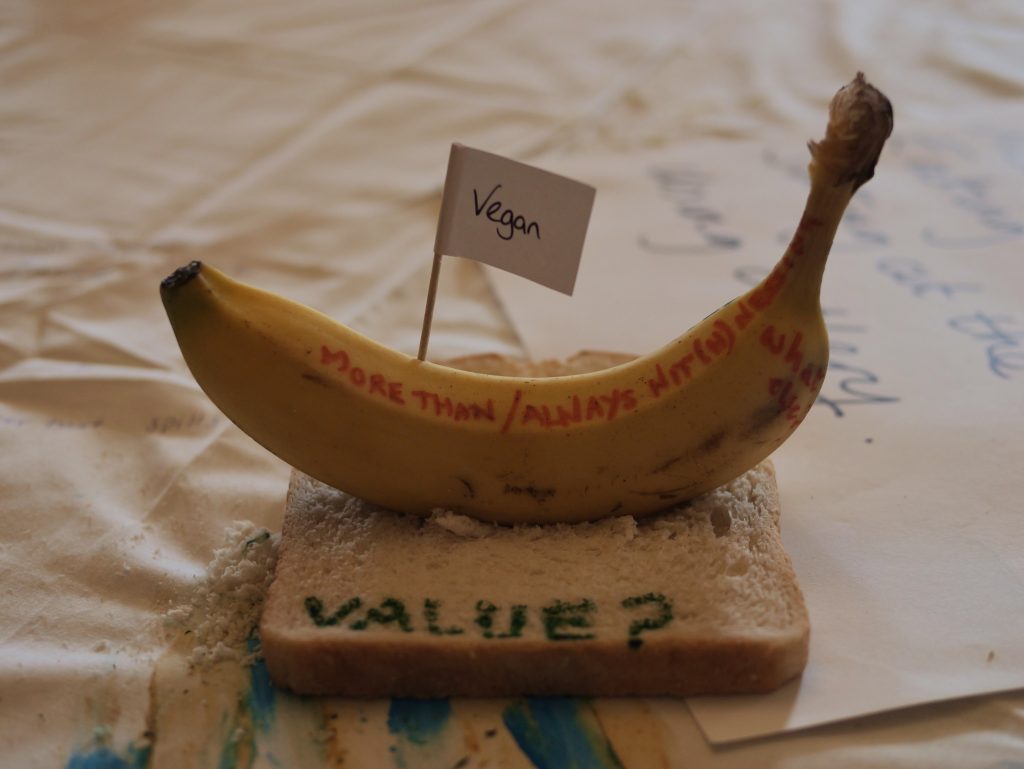
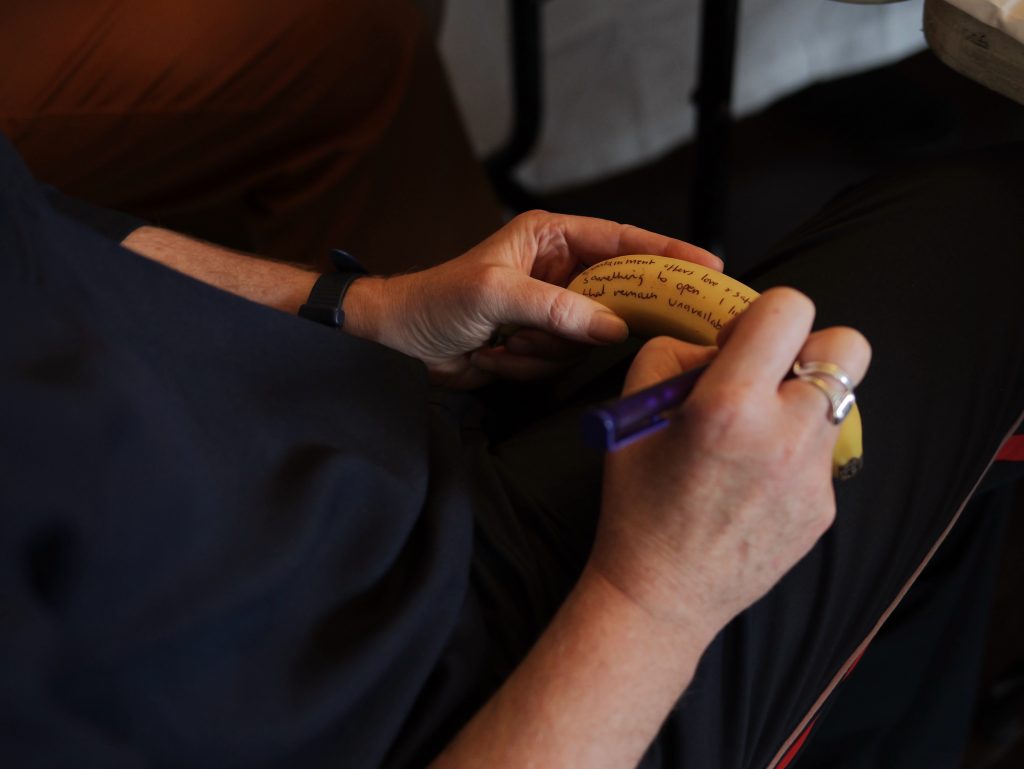
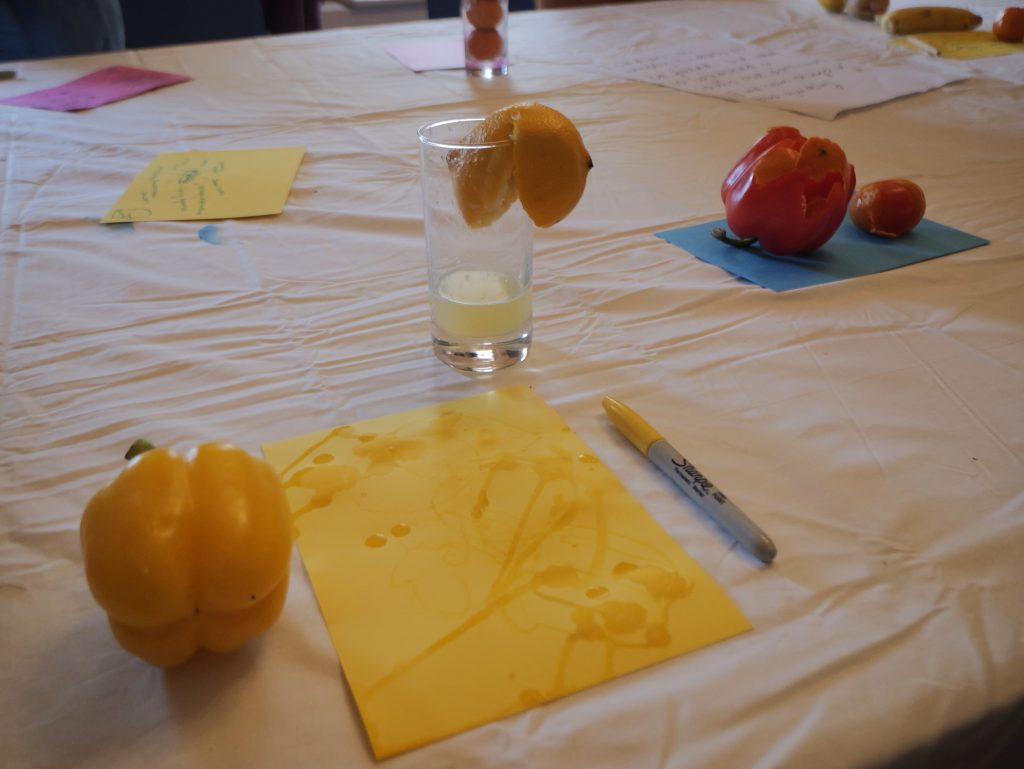
Many of our artworks and conversations that punctuated the day considered the moralising of both food and feeding practices whether as toddler or caregiver. The moralising of feeding only ever seemed to be in unhelpful or ways – ways in which bodies were shamed, regulated, parenting practices judged, cultural differences squashed and othered, and in toddlers lives, the development of normative individual, independent, disembodied entity was always present.
At the end of the, we together, got somewhere. That place might not be comfortable, it might involve more questions than answers, and it is certainly unlikely to be neatly concluded, or a group consensus. Inspired by Hohti and Tammi (2023), we could think about the ideas, questions, uncertainties, emotions and full bellies of food as a kind of “composting storytelling”, in which all kinds of elements cluster together, interact, partially combine, and create something new, potentially something nourishing and generative for the future.